Whispers of the Wild: A Journey Through the Sundarbans
The Sundarbans is not just a forest, it is a living mystery. From glowing waters and silent creeks to the roar of the Royal Bengal Tiger, it is nature’s greatest performance staged between river and sea. Join us as we explore the untamed beauty of the world’s largest mangrove forest.
8 min read
There are places that make you feel small, and then there are places that make you feel alive. The Sundarbans does both. Spread across the delta of Bangladesh, this vast mangrove forest is where land dissolves into water, and silence speaks louder than words. Here, the rivers breathe, the trees stand on roots like stilts, and the wind carries stories of tigers, storms, and survival. It is not a place you simply visit. It is a place you listen to.
1. Where the Rivers Create a World of Their Own
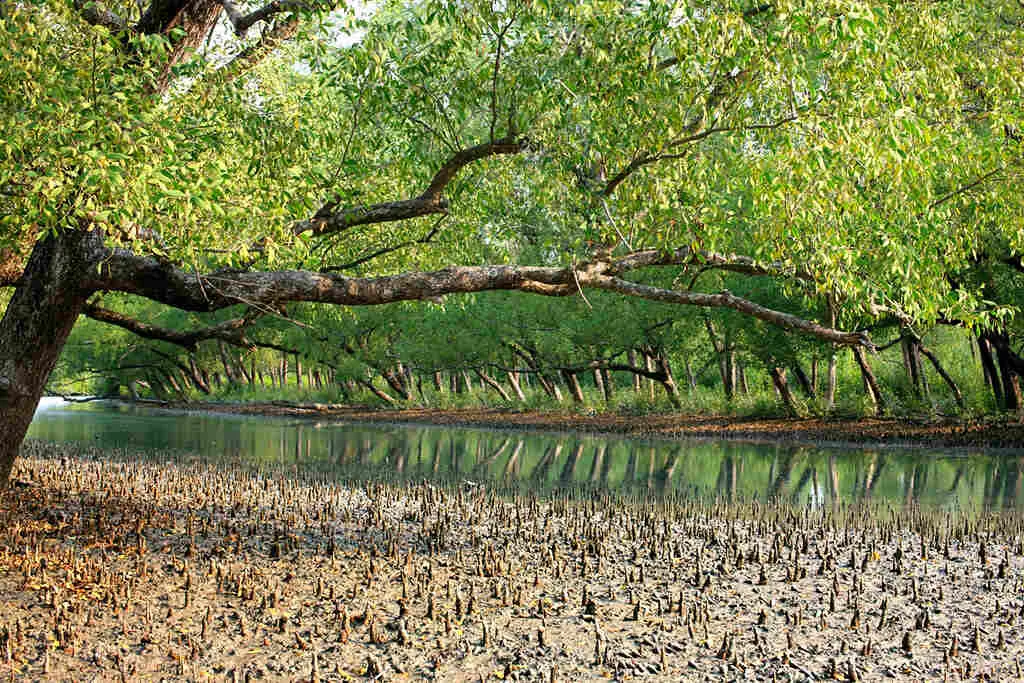
The Sundarbans is formed by the meeting of three great rivers — the Ganges, Brahmaputra, and Meghna. Together they weave a landscape that shifts with every tide.
One moment it is forest, the next it is water.
As your boat glides through narrow creeks lined with tangled roots, the world becomes rhythm — the splash of oars, the call of birds, the rustle of leaves. The deeper you go, the quieter it becomes, until the only sound is the forest breathing.
2. The Royal Bengal Tiger – Spirit of the Mangroves
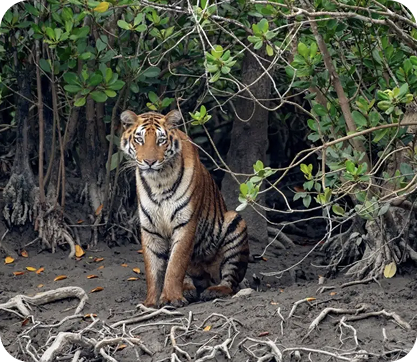
You might never see the tiger, but you will feel its presence.
This is the tiger’s kingdom — powerful, silent, and unseen. Around one hundred of these magnificent creatures roam freely through the forest, adapted to swim across rivers and hunt on muddy shores.
Locals call them Bagh Raja, the king of the jungle. For those who visit, the thrill lies not in seeing it, but in knowing it could be anywhere. A single pawprint in the mud is enough to make your heart race.
Tip: The best time to spot tiger tracks is in early winter, around Kotka or Kochikhali areas during low tide.
3. The Dance of Light and Water
Every journey through the Sundarbans feels like moving through a painting.
Morning mist rises off the water in soft swirls. Sunlight filters through the mangroves, painting ripples of gold. Even the shadows here have a rhythm — slow, fluid, and hypnotic.
At night, the forest glows in its own way. Bioluminescent plankton drift in the water, sparkling with each wave, as if the stars themselves have fallen into the river.
It is one of the few places on Earth where nature still performs in silence.
4. Life on the Edge – The People of the Sundarbans
Beyond the wildlife, the Sundarbans is also home to a resilient community of people who live with nature, not against it.
Fishermen, honey collectors, and crab catchers work under the open sky, always aware that danger is near — yet their bond with the forest runs deep.
The Mawalis, traditional honey gatherers, venture into the forest every spring with smoke torches and faith. They risk tiger attacks and storms to bring back wild honey so pure it smells like the forest itself.
When you taste it, you taste courage.
Traveler’s Insight: Meeting these people, even briefly, changes how you see life. Their stories are raw, real, and humbling.
5. The Magic of Mangroves
Mangrove trees are the true heroes of this ecosystem. Their roots rise like sculptures, breathing through the salty mud, protecting the coast from erosion and storms.
They are nature’s engineers — silent guardians that hold the land together.
Each mangrove species serves a purpose. The Sundari, after which the forest is named, is the queen among them, with roots that twist elegantly like veins of the earth.
6. What You Will See and Feel
Wildlife:
Spotted deer grazing under golden light
Saltwater crocodiles sunning on mudflats
Ganges river dolphins playing in the current
Monkeys, monitor lizards, wild boar, and hundreds of bird species
Emotions:
Awe when you see the mist part over the river
Calm when the boat moves through still water
Gratitude when you realize you are a guest in something ancient and sacred
7. How to Experience the Sundarbans Right
Best Time to Visit:
November to February — dry, cool, and full of life.
How to Go:
Start from Mongla Port or Khulna, where eco-friendly boats and guides are available for 2–3 day tours.
What to Bring:
Lightweight clothes and a hat
Binoculars and a camera
Refillable water bottle and eco-friendly sunscreen
An open heart for wonder
Responsible Travel Tip:
Travel only with licensed operators who follow eco-tourism guidelines. The Sundarbans is delicate — respect its silence, never litter, and support local communities when possible.
8. When Night Falls on the Delta
Night in the Sundarbans is unlike anywhere else. The world slows. The stars mirror themselves on the river. Somewhere, a crocodile slips into the water, unseen.
Lanterns flicker on your boat, and you realize there is no Wi-Fi, no noise, no rush — only peace.
In that stillness, the forest tells you its secret:
You are not apart from nature. You are part of it.
Final Thoughts
The Sundarbans is more than a destination. It is a journey into the wild heart of Bangladesh — a place where everything is alive, connected, and perfectly balanced.
Here, the land and sea write poetry together. The tigers, trees, and tides all whisper the same truth: the world is still full of wonder, if you just know how to listen.
Ready to experience it for yourself?
Let Bangladesh Bound take you on a journey through the Sundarbans — where every tide tells a story, and every story stays with you forever.